Overview
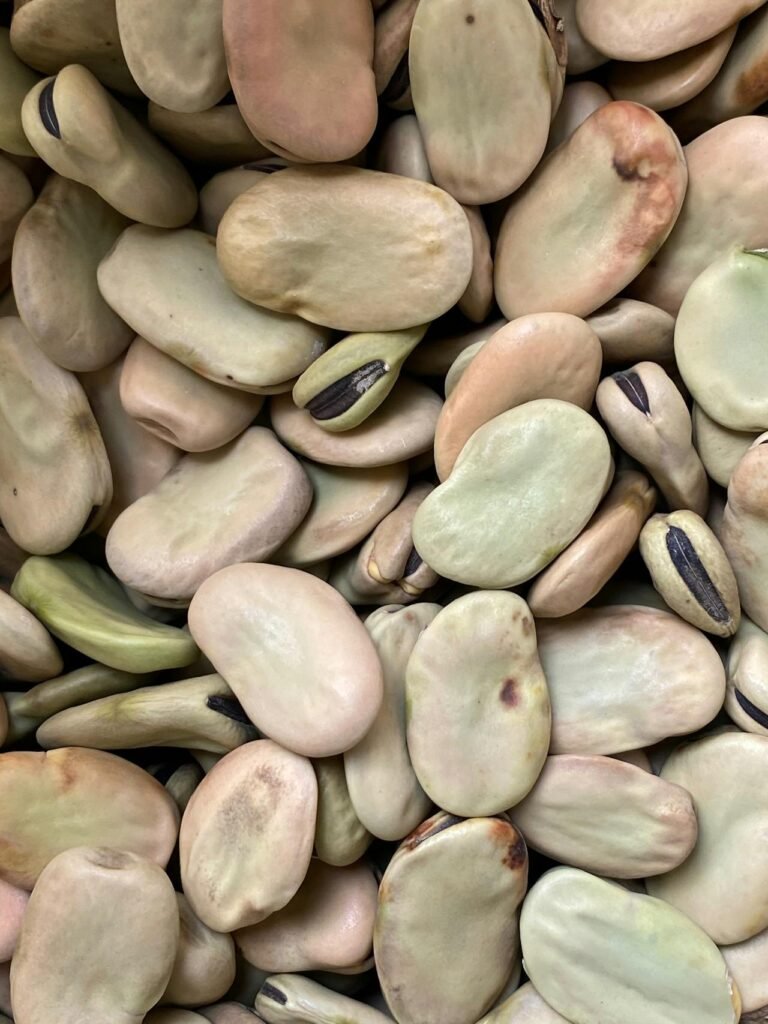
Faba beans (also known as broad beans or field beans) are one of humanity’s oldest cultivated crops. In Australia, faba beans are grown as a winter pulse primarily in South Australia (which accounts for roughly 50% of national production), Victoria and NSW. Production typically ranges from 300,000 to 600,000 tonnes annually.
Faba beans occupy an important ecological and economic niche in Australian farming systems. Their high nitrogen fixation capacity (typically 100–250 kg N/ha in a good season) makes them one of the most valuable rotation crops for following cereal crops.
Human Consumption: Egypt and the Middle East
The most important use of Australian faba beans is human consumption, particularly in Egypt where ful medames — a traditional dish of cooked faba beans seasoned with olive oil and spices — is essentially the national dish. Egypt is the world’s largest importer of faba beans and a critical market for Australian exporters.
🌿 Nitrogen Champion
Faba beans are among the most prolific nitrogen-fixers of all pulse crops. In a good season with effective rhizobium inoculation, a faba bean crop can fix 100–250 kg N/ha — equivalent to $100–250 of urea fertiliser savings for the following cereal crop.
🫙 Ful Medames — Egypt's National Dish
Ful medames (stewed faba beans) has been eaten in Egypt for millennia and remains a staple breakfast food consumed by millions of Egyptians daily. Egypt imports approximately 400,000–500,000 tonnes of faba beans annually.
🐷 Stockfeed Value
Faba beans not meeting human consumption grades are sold into the domestic stockfeed market, particularly for pig and poultry rations. Zero-tannin varieties are preferred and command a premium for stockfeed use due to their higher digestibility.
🌸 The White Flower Test
Zero-tannin faba bean varieties have pure white flowers, while tannin varieties have flowers with distinctive dark purple-black wings on the petals. This visible difference makes in-field variety identification straightforward.