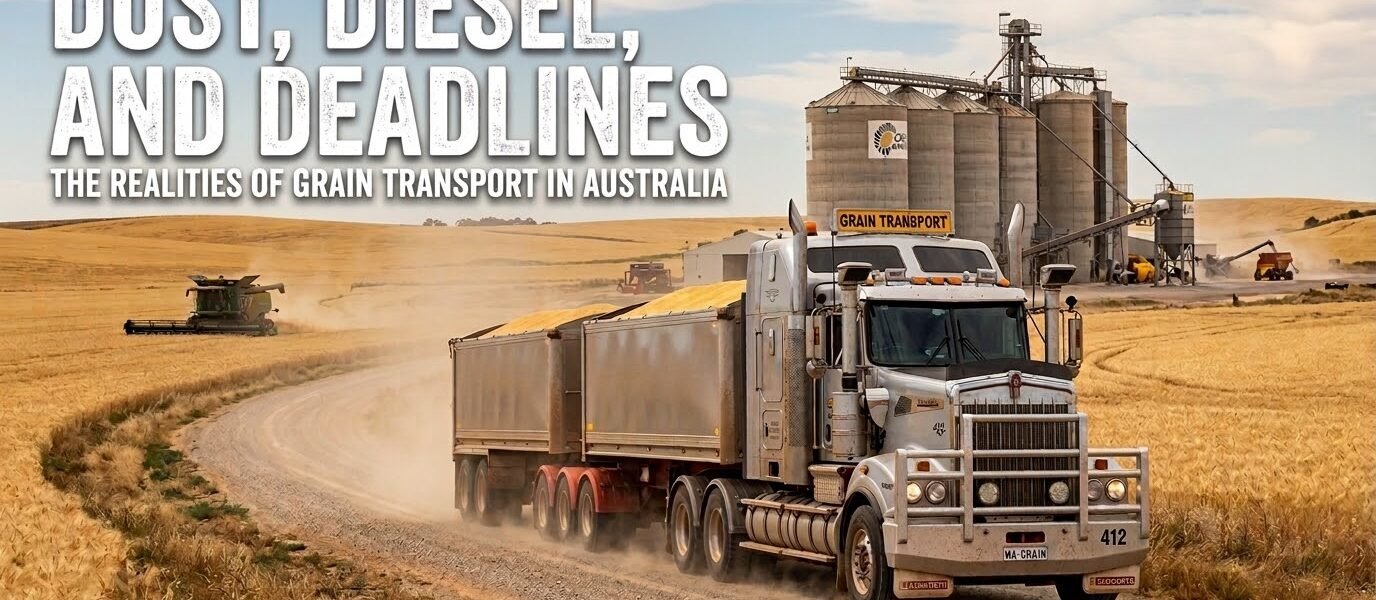

If you have ever stood near a country receival site in the heat of late November, you know the feeling. The air is thick with chaff, the rumble of heavy diesel engines vibrates in your chest, and the line of trucks stretches back as far as the eye can see.
This is the frontline of Australian grain. It is a world governed by dust, diesel, and relentless deadlines.
While the art of grain growing captures the romance of agriculture, the reality is that a crop isn’t worth a cent until it is moved. The logistics of grain transport form the vital, often unsung arteries of our entire agricultural economy. Whether it is a bumper wheat harvest in Western Australia or a record sorghum crop in Queensland, getting millions of tonnes of grain from isolated paddocks to global markets is a logistical marvel.
The Choreography of the Harvest Rush
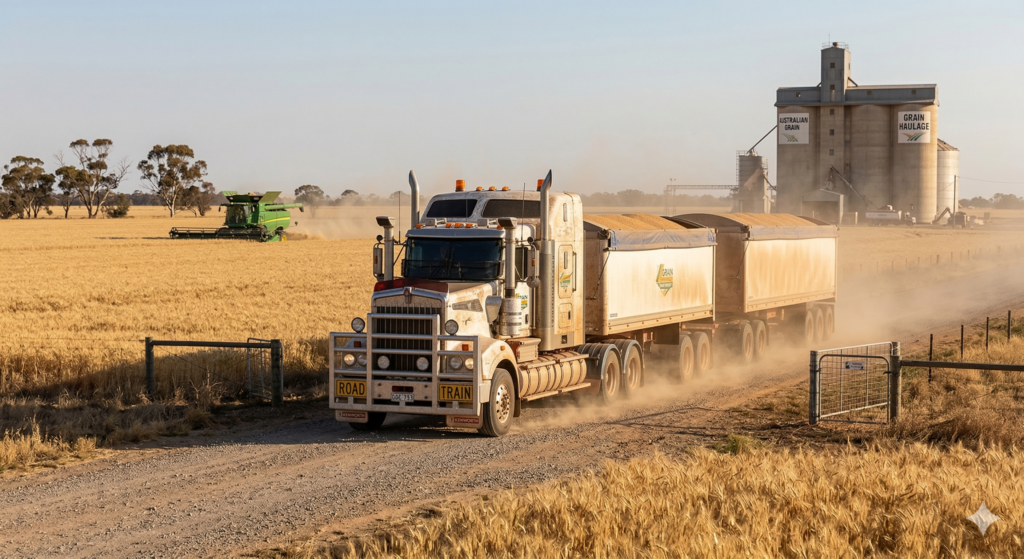
When the grain is ripe and the moisture levels are right, time is the ultimate enemy. A sudden storm or a week of extreme heat can downgrade a premium crop to feed quality in a matter of days. This pressure triggers a massive, highly choreographed movement of machinery.
The journey begins in the paddock. Headers offload on the move into chaser bins, which hustle to the edge of the field to fill waiting trucks. From there, it is a race to the local silo. Over decades of watching this dance at Graincorp, CBH, and Cargill sites, one thing remains constant: the sheer stress and stamina required by the drivers and site managers. Turnaround times at the weighbridge and the grid are scrutinized by the minute, because a truck waiting in line is a truck not moving grain.
Road vs. Rail: Moving the Mountain
Once the local storage bins are full, the next phase of grain transport begins: moving the mountain to the port. This requires a delicate balance of road and rail infrastructure.
- The Heavy Haulers: On the road, the industry relies on high-mass vehicles like B-doubles and massive road trains. These operators navigate narrow country roads and negotiate complex fatigue management laws to keep the supply chain flowing.
- The Iron Roosters: Rail remains the undisputed king of bulk movement. A single train can haul thousands of tonnes directly into the port terminals. While rail infrastructure in Australia has faced its share of historical underfunding and gauge-width challenges, it is the only way to achieve the scale required for modern export.
- The Storage Giants: Between the farm and the port sit the massive concrete and steel silos. These sites act as the pressure valves for the industry, segregating grades, managing pest control, and holding the grain until the ships arrive.
Beyond the Bulk: The Rise of Grain Packing
While the image of massive bulk carriers loading at deep-water ports dominates the narrative of grain export, the industry has quietly evolved. We are no longer just a bulk commodity supplier.
The rise of grain packing into shipping containers has transformed how we access niche global markets. Containerization allows us to export high-value, identity-preserved grains—like premium malt barley or specific pulses—directly to specialized buyers in Asia and the Middle East. It requires a different type of transport logic: moving empty boxes to regional packing facilities, stuffing them to exact weight tolerances, and rail-freighting them to bustling container ports.
A World-Class Supply Chain
The Australian grain supply chain is not without its faults. We battle crumbling regional roads, unpredictable weather, and fierce international competition. Yet, decade after decade, the industry adapts. We have moved from rigid, state-run rail schedules to dynamic, technology-driven logistics networks.
At the end of the day, when the ships pull out of port carrying Australian wheat, barley, or canola to feed the world, it is a testament to the truckies, the train drivers, the schedulers, and the site workers. They are the people who turn the dust and diesel of the harvest into a world-class export industry.