
Safe Grain Storage in Australia Starts With More Than Just a Container
Safe grain storage in Australia is not simply about putting grain under cover and hoping for the best. The industry treats storage as part of a wider quality-management system: storages must be maintained to minimise the entry of pests, vermin and moisture, grain must be monitored to preserve its quality, and records must be kept so traceability is maintained through the supply chain. Grain Trade Australia’s current Code of Practice also makes it clear that effective storage, pest management, hygiene and grain-quality management are central to meeting both domestic and export customer requirements.
That matters because Australia often stores grain through hot weather, long inland freight windows and delayed marketing programs. If grain is put away too warm, too wet, too dirty or in the wrong type of storage, quality can slip quickly through insect activity, mould, moisture migration, contamination or outright spoilage. The safest storage systems are the ones that match the grain, the season and the intended storage period.
The Main Grain Storage Systems Used in Australia
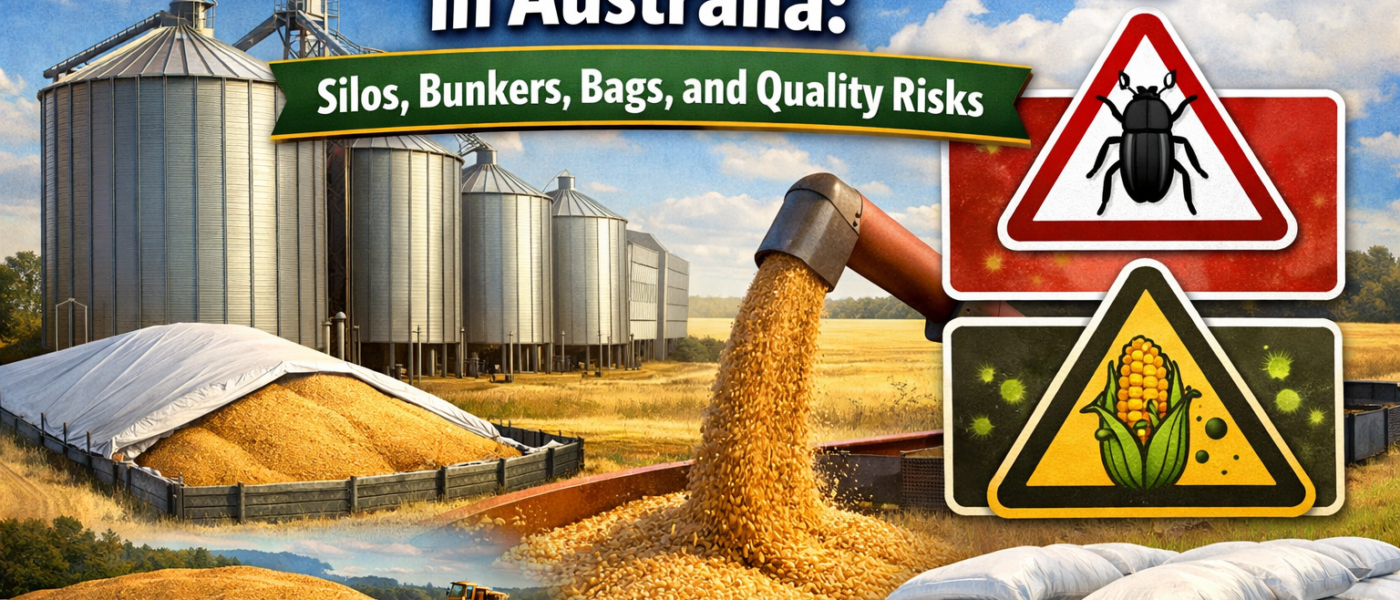
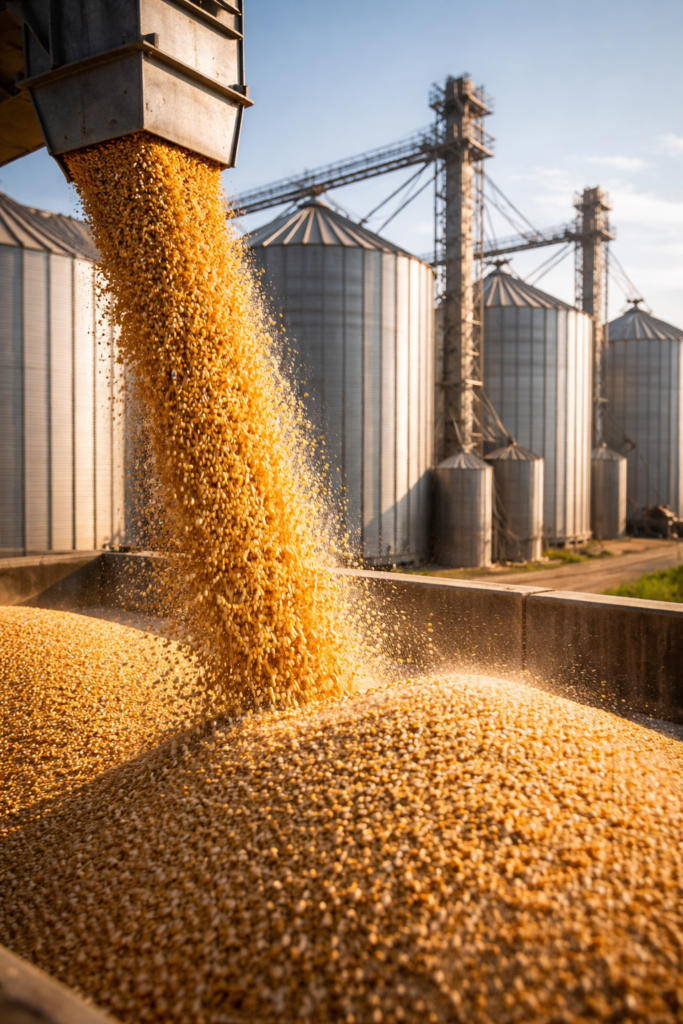
Australia uses a mix of permanent and temporary storage systems on farm and in the bulk system. GRDC’s 2024 Grain Storage GrowNotes, drawing on Kondinin Group NAS 2021 data, shows on-farm grain storage is dominated by gas-tight sealable silos at 53%, followed by non-sealed silos at 28%, grain bags at 10%, and sheds, bunkers or pits at 9%. That mix tells its own story: silos remain the backbone of safer long-term storage, while bags and bunkers are mainly used where growers want lower-cost or short-term capacity, especially around harvest.
Each storage type has a place. Silos offer control, hygiene and aeration. Bags offer fast overflow capacity in harvest. Bunkers and sheds can hold large volumes at comparatively low capital cost. But none of them are equally safe for every purpose. The right question is not “Which storage is cheapest?” but “Which storage gives this grain the best chance of staying dry, cool, insect-free and in spec for the time I need to hold it?”
Sealed Silos Are the Gold Standard for Safe Grain Storage
From an Australian grain-industry perspective, gas-tight sealable silos are the safest and most versatile all-round option for long-term on-farm storage. GRDC lists major advantages including the ability to use phosphine and controlled atmospheres for insect control, straightforward aeration, simple in-loading and out-loading, easier hygiene management, reuse multiple times in season and a service life expected to exceed 30 years. GTA’s Code also says industry preference is for sealed, well-maintained permanent storages with aeration to help maintain grain quality in storage.
The key word, though, is sealable in the true sense, not just in the marketing sense. GRDC warns growers to be careful with terms like “fumigatable silo” because a silo is only suitable for fumigation if it is genuinely gas-tight and proven that way. A silo sold as “sealed” is not really sealed for fumigation unless it passes the Australian Standard AS2628 pressure test, and GRDC says that test should be done when the silo is new and then maintained over time because seals deteriorate.
That is crucial because proper fumigation only works in a gas-tight storage. Stored Grain’s guidance says the only way to control insects at all life stages with fumigation is in gas-tight storage, and poor fumigation in leaky storages is exactly the sort of practice that leads to treatment failure and resistance problems. In practical terms, sealed silos are not just the best storage for protecting quality; they are also the best insurance against letting a manageable insect issue turn into a much bigger one.
Non-Sealed Silos Still Have a Role, but They Are Not a Fumigation Solution
Non-sealed silos remain common in Australia because they can be cheaper than gas-tight silos and still provide useful weather protection and day-to-day storage capacity. But GRDC is blunt on the main limitation: a non-sealed silo cannot be used for phosphine fumigation. That means growers using older or cheaper unsealed silos need to think more carefully about keeping grain dry, cool and clean, because they have fewer effective insect-control options once problems start.
That does not make non-sealed silos poor storage by definition. They can still be useful for shorter-term storage of sound grain, particularly if they are fitted with aeration cooling. Stored Grain notes that silos are well suited to aeration because cooling is comparatively simple to administer after harvest, and that airflow rates of about 2 to 3 litres per second per tonne are typically used for aeration cooling. But the management margin is tighter than in a good gas-tight silo, because once insects become established, fumigation is no longer straightforward.
Grain Bags Work Best as a Short-Term Harvest Tool
Grain bags have become popular because they let growers add capacity quickly and cheaply when harvest logistics are under pressure. GRDC says they are increasing in popularity as a short-term storage solution to assist harvest logistics, and Stored Grain describes them as best used for short-term storage only, with around three months regarded as a practical maximum in many Australian grain regions. GRDC likewise says bags are best suited to storage for a few months, after which the risk of losses and spoilage rises significantly.
The reason bags are not a true set-and-forget storage system is simple: they are more exposed. GRDC says successful bag storage depends on a carefully prepared elevated, compacted, well-drained pad, regular checks for cuts, nicks and holes, and patching where needed. Stored Grain also warns that mice, birds and other vermin can attack bags, and that access after rain can become a serious issue if the bags are not near an all-weather road.
Moisture and heat make the risks greater. Stored Grain notes that storing cereals and pulses above an average moisture content of 12.5% can trigger mould and insect outbreaks, and its safety guidance warns that higher-moisture grain in bags not only compromises quality but can also swell and split the bag. Bag storage can be very useful, but only when growers treat it as a temporary logistics tool that needs vigilance, not as the equivalent of a well-equipped silo system.
Bunkers and Sheds Can Hold Big Volume, but They Need More Management
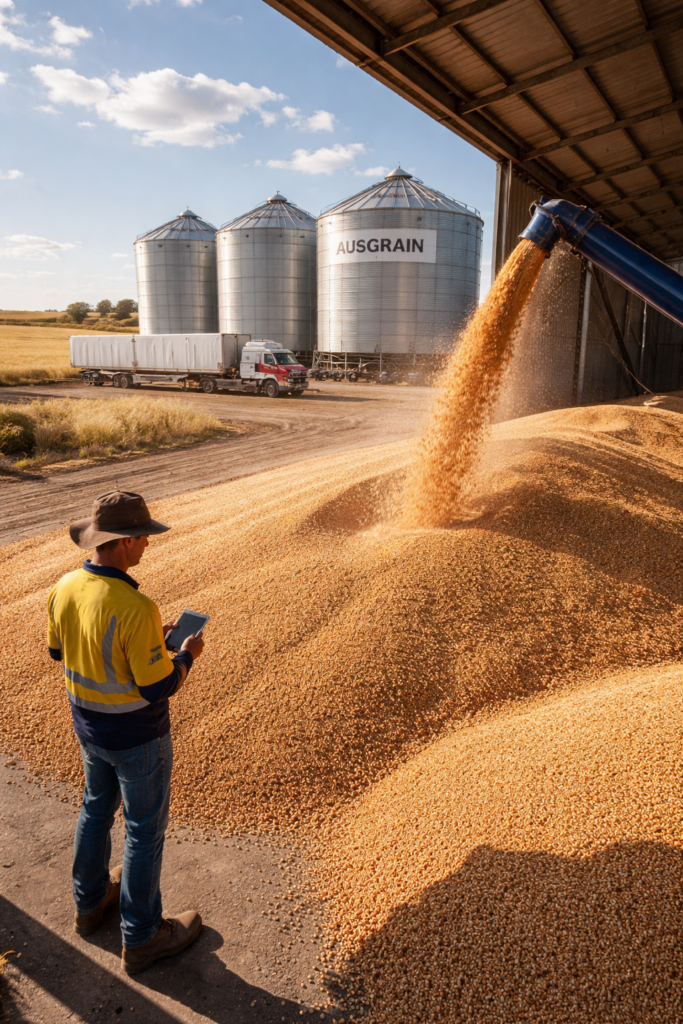
Bunkers and sheds are often attractive because they can create lower-cost storage capacity for large tonnages. GRDC notes that bunkers can have lower fixed costs than some other options, but they often come with higher variable costs and less flexibility. They also require careful site preparation, labour to handle covers, and machinery to load and unload the stack.
They are also harder to manage safely from a grain-quality point of view. GRDC says bunkers require an elevated site that can be graded properly to shed water, and it explicitly notes that insect infestations in sheds and bunkers are difficult to treat effectively. It also points out that aerating grain in sheds is difficult because grain depth varies and specialised ducting is often needed. Stored Grain similarly says sheds and bunkers are most useful as short-term solutions that complement other gas-tight storage on farm rather than replace it.
In other words, bunkers and sheds can absolutely work, especially in harvest or for large overflow programs, but they demand more discipline. Tarps, drainage, hygiene, out-loading systems, inspection frequency and weather exposure all matter more. The storage may be cheaper per tonne at the start, but the management risk is usually higher.
The Biggest Grain Quality Risks in Storage
Moisture and Mould Risk in Stored Grain
Moisture is one of the fastest ways to turn good grain into a problem. Stored Grain says cereals and pulses stored above an average moisture content of 12.5% can run into mould and insect outbreaks, while high-moisture grain at typical harvest temperatures creates ideal conditions for rapid heating and damage if not managed quickly. Its guidance also notes that grain slightly over safe moisture can be held temporarily under aeration cooling, but that is a short-term holding strategy, not a substitute for getting the grain dried or blended back to a safe level.
That is why safe storage in Australia is built around dry grain first, then cooling and monitoring. If grain goes into storage too wet, cooling fans may buy time, but they do not magically remove the underlying moisture problem unless the system is designed for drying. The safest practice is still to store grain dry, keep it dry, and use aeration as a quality-preservation tool rather than a cure-all.
Insect Pressure and Pest Risk in Stored Grain
Insects are a constant storage risk in Australian conditions, especially when grain stays warm after harvest. Stored Grain says grain temperatures below 20°C significantly reduce mould and insect development, and that most young storage pests stop developing below about 18–20°C. It also notes that rice weevil stops developing below 15°C. That is why aeration cooling matters so much: warm grain gives pests a head start, while cool grain slows the whole cycle down.
GTA’s Code adds the market perspective. It says the industry adopts a nil tolerance for live stored grain insects on outturn to domestic or export markets, and it requires regular sampling, grain inspection, hygiene and insect-control programs during storage. So insect control is not just about avoiding shrinkage or poor hygiene on farm; it is also about protecting saleability when the grain finally leaves storage.
Hygiene, Contamination and Carryover Problems
A surprising amount of grain trouble starts with old grain, dust and residues left in storages or handling gear. Stored Grain says meticulous hygiene is a key part of pest prevention because residues in storages or old grain left from a previous season provide ideal breeding sites. GTA’s Code says storages, their surrounds and all associated handling equipment should be regularly checked to prevent the entry of pests, vermin and weeds, and that grain spillages and dust should be cleaned up as soon as practical after grain movement.
This is one reason safe storage is never only about the silo, bag or bunker itself. Augers, field bins, elevators, out-loading gear, pads, bunker surrounds and traffic areas all influence whether grain stays clean and marketable. A well-built storage used carelessly can still cause trouble if carryover contamination is allowed to build up around it.
How Grain Is Stored Safely in Australia in Practice
In practical terms, safe grain storage in Australia usually comes down to five things: use the right storage for the intended storage period, fill it with sound grain, keep the grain cool, keep the site and equipment clean, and inspect it often enough to catch problems early. GTA requires regular sampling and inspection, maintenance of segregation and grain integrity, hygiene programs, and records for storage and grain movement. That is the day-to-day discipline that keeps grain in spec.
For most growers, that means sealed silos with aeration are the safest base system, while bags, sheds and bunkers are best treated as tactical storage for harvest pressure, overflow capacity or shorter-term holding. The farther a grower moves away from a well-maintained sealed silo, the more management becomes the deciding factor. Temporary storages can work well, but only when they are checked more often and used with a clear time horizon.
Final Word: Good Grain Storage Protects Value, Not Just Tonnes
The safest way to think about grain storage in Australia is this: storage is not just a place to hold grain, it is a system for preserving value. Silos, especially gas-tight sealable silos with aeration, offer the highest level of control. Grain bags can be excellent short-term harvest tools. Bunkers and sheds can add economical volume. But the farther storage moves from sealed, aerated, permanent infrastructure, the more vulnerable the grain becomes to moisture, insects, vermin, water ingress and quality loss.
That is why the best storage operators in Australian grain focus on the basics relentlessly: dry grain, cool grain, clean grain, sound storages, real monitoring and fast action when something starts to go wrong. Those are the habits that keep grain saleable from harvest through to outturn.